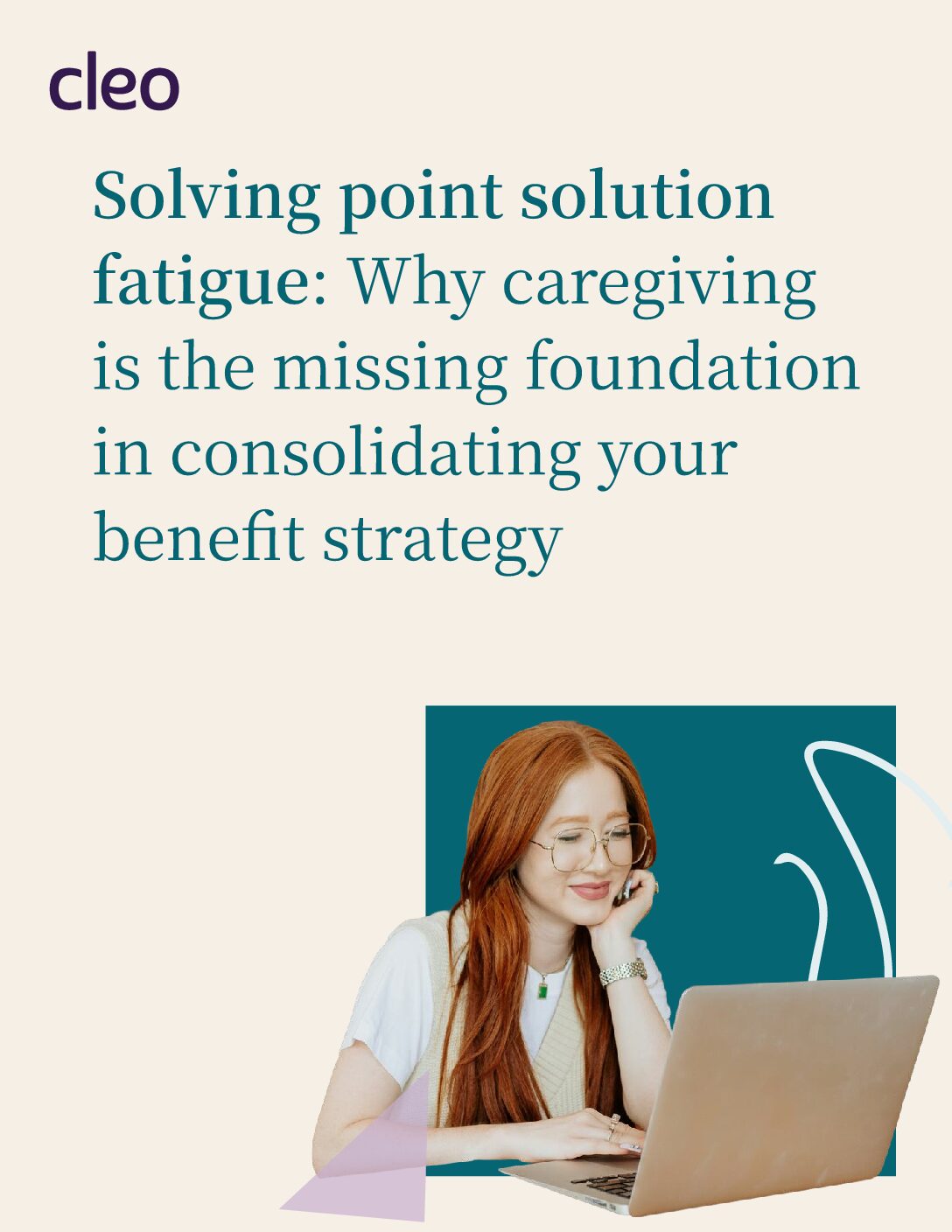
Ready to uncover the hidden caregiving gaps in your benefits stack?
Download your copy now to learn how unified care navigation solves point solution fatigue.
When an employee faces personal burnout, a major life transition, or complex family caregiving, standard benefit strategies often direct them to familiar channels: consult a doctor, call the EAP hotline, or speak with HR.
On paper, coverage looks complete. In practice, employees quickly encounter the limits of standard benefits and find themselves stranded in the time-consuming in-between.
Standard benefits are transactional: a doctor writes a prescription, an EAP offers short-term counseling, and a manager handles workplace growth. But personal life rarely unfolds in neat, isolated events. To maintain an engaged and resilient workforce, companies must look beyond siloed programs and provide continuous, objective wraparound support that fills the gaps standard benefits leave behind.
Consider the non-clinical hurdles traditional benefits miss—the problems that lie beyond a doctor’s appointment, but feel too personal for the workplace, such as:
When employees manage these challenges alone during work hours, productivity drops and burnout accelerates. While traditional benefits handle discrete clinical or professional events, a caregiving benefit can serve as the connective tissue—a constant partner walking alongside employees through everyday logistics.
When employees manage these challenges alone during work hours, productivity drops and burnout accelerates.
Rather than a one-and-done point solution, a caregiving benefit like Cleo provides continuous, long-term support across every life stage—from family planning and parenting to eldercare and managing self-care needs. By acting as a high-trust, lifelong partner, Cleo maximizes the impact of your existing ecosystem:
Consider Marcus, a Senior Software Engineer balancing key technical deliverables with evolving family challenges at home.
Marcus noticed his 7-year-old son struggling with sensory processing. Waiting lists for specialists were months long, and the stress began impacting Marcus’s daily focus at work.
Overwhelmed by unvetted directory listings, Marcus hesitated to bring the personal issue to his manager for fear of appearing overburdened.
Marcus connected with his dedicated Cleo Guide. Cleo paired him with a Neurodivergence Specialist to build home routines and prepare for school IEP meetings, while the Care Activity Team vetted local specialists with immediate openings. Recognizing Marcus was reaching burnout, his Guide also connected him seamlessly to his employer’s EAP therapy benefit.
Throughout the process, Cleo served as the single constant—reducing administrative burden and keeping Marcus focused at work.
When employers rely solely on static, transactional benefits, employees are left to stitch together their own care strategy during their most vulnerable moments.
By offering Cleo as the connective tissue across your ecosystem, you can give your workforce a trusted, constant advocate. The result? Higher employee retention, reduced healthcare spend, and a workplace culture that truly supports the realities of everyday life.
Ready to see how proactive, holistic support keeps your workforce engaged and supported? Get in touch with our team today to discover how Cleo can fill the gaps in your benefits stack.
Download your copy now to learn how unified care navigation solves point solution fatigue.